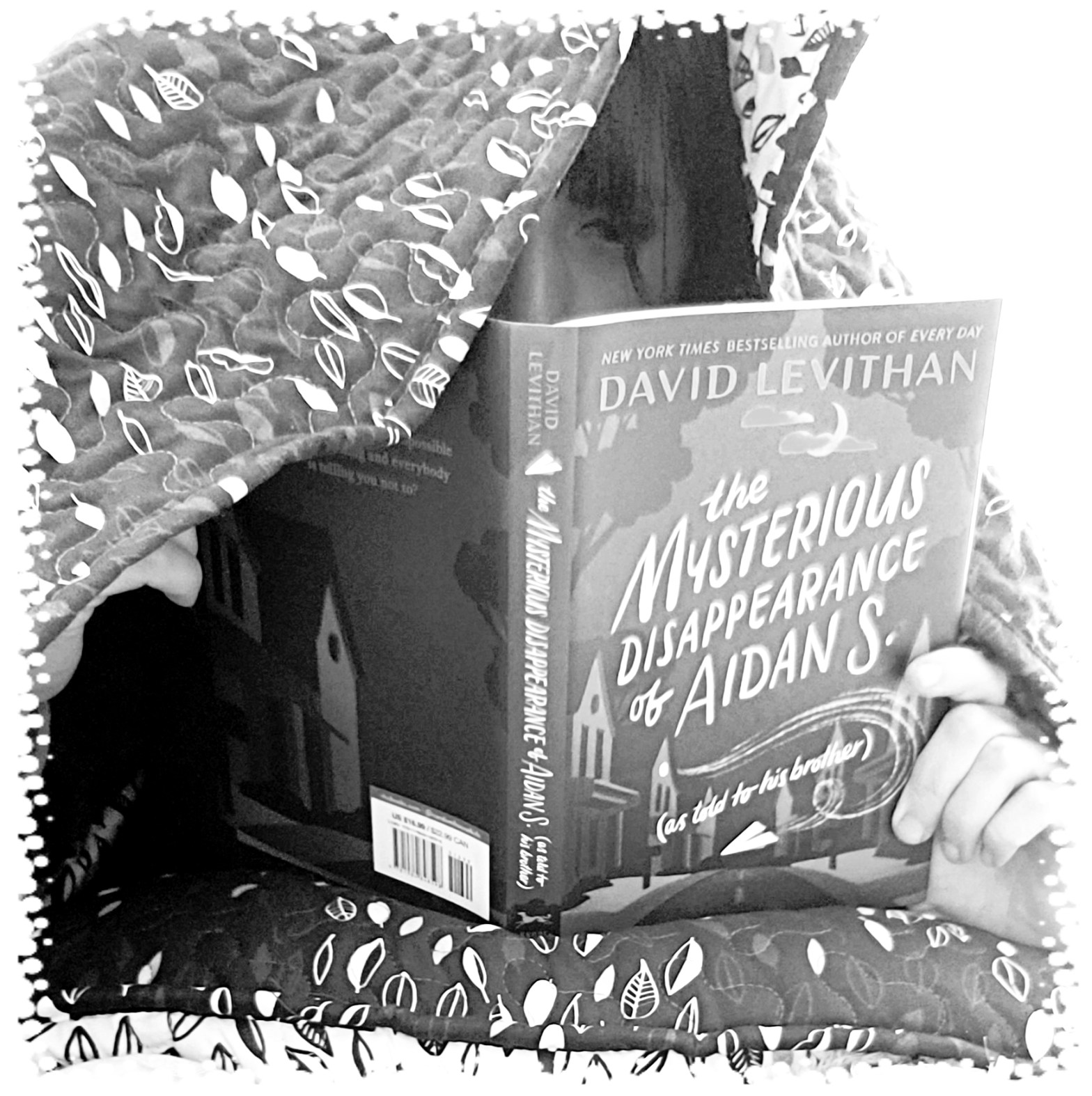
Premise: Lucas’s brother Aidan disappeared. For a week, he was nowhere to be found. When he reappears as mysteriously as he disappeared, the entire community is thrilled, but Aidan’s story about where he’s been alters how people react.
Rating: 2.5/5 Target: 4-7
Motifs: truth, camaraderie, belief, friendship, brothers, public opinion, perception, rejection vs. support, LGBQTIA+
Title: not much significance here, other than the potential misconception that the bulk of the narrative will be in Aidan’s words. Lucas tells this narrative. It’s about him and his conflict given Aidan’s disappearance and reappearance.
Main Characters: Aidan (12 y.o. he/him), Lucas (11 y.o. he/him)
Great for…* (readers): who appreciate a story without a lot of action or are looking for positive LGBTIA+ adult role models
Great for…* (teachers): theme/motif development, small groups/reading circles, words of the wiser (Notice&Note)
*The “Great for” category is not exhaustive and does not intend to neglect the multitude of readers/teachers who could learn from this book in any number of ways.
RATINGS GUIDE
٭ = DNF, would not recommend ٭٭ = would not recommend ٭٭٭ = enjoyable, would recommend ٭٭٭٭ = very good, would recommend ٭٭٭٭٭ = amazing, would definitely recommend
When last we saw K and Z in episode m,part 3, K and Z discovered a present on the porch. What’s it it and whose it from? Read on! It’s time to begin the end of episode m.
K grabbed the box from the porch with greed, as though grabbing at freedom and fresh air itself. She brought it inside, showing Z. She tore into it.
“It has a note,” said K.
“Show it to me,” said Z.
K held the note up to the mirror for Z to see.
“Open it first!” said Z.
“Well you didn’t say that,” said a peeved K.
K opened the note and showed Z the message on the note.
Z read aloud.
Dear KZ Rochelle, We figured those boys of yours must be eating you through house and home now that they’re there at home all the time, so we’re sending you these supplies. With Love, Your Parents
Z looked up from the message into K’s eyes. “There are boys here?” Z asked far too calmly.
“Yes, Z. My boys,” said K.
“Your sons?” asked Z.
“Of course, Z.” K laughed. “You are so silly sometimes.”
“You have sons!?” Z yelled. “And just what have they been doing this whole time!?”
“I don’t know, Z. Playing video games?”
Just then, K’s phone beeped.
“Oooooh!” said K. “A message.”
K pulled out her phone and opened it up.
K read the message. “Although your milk flag was noted by our system, you will not receive a delivery today as you are not permitted to receive more than one grocery delivery in a single day. We look forward to serving you in the future.”
“Damn it, K!”
“What is it, Z?”
“Don’t you understand?”
“Yes. I understand that you understand and I understand the chemical potential is just the Gibbs free energy norma—”
Z interrupted K. “I know! I know! You understand the chemical potential is just the Gibbs free energy normalized to the amount of substance.”
“I do,” said K.
“But what you don’t seem to comprehend is that our plan has been foiled!” said Z.
“Shall I put foil on this food?” asked K.
“Oh, goodness,” said Z.
“Good, yes,” said K and she closed up the box to begin wrapping its exterior in tin foil.
With one side foiled, a door squeaked open.
“Hey, Mom,” said a tweenage boy from underneath a cap. “Do you want to play video games with us?”
“I surely do,” said K and ran off to play video games, leaving Z alone on the floor of the foyer next to a large foil-covered box where she sat cogitating how they would certainly escape the confines of these four walls with tomorrow’s plan.….
Will K and Z escape their four walls with tomorrow’s plan? Find out in the next installments in The Days of Our Pandemic
When last we saw K and Z in episode m, part 2, they wereconsidering all the wonderful national forests they could visit after a successful escape via their grocery delivery steal away scheme.
“But you get the idea. We will visit a myriad of national forests and document our excursions via photography.”
K pulled her phone from her back pocket.
A flash went off in Z’s eyes.
“What was that for?” Z asked through spotted vision.
“To document the beginning of the excuses for photography.”
“Excursions,” corrected Z.
“Exactly,” said K.
“Oh, forget about it,” said Z, extremely exasperated with K and her lacking exactitude yet again.
“Can we play a game now, Z?” asked K.
“What game?” asked Z.
“Simon Says,” said K.
“Sure, K,” said Z, too annoyed to bother redirecting K.
“I do love Simon Says,” said K.
“So you say,” said Z.
“Not me, Z. Simon. Simon Says,” said K.
“As you wish,” said Z.
“As you wish for what?” asked K.
“Must we do this again?” asked Z, recalling a similar conversation from yesterday’s attempted escape from the enclosure of these four walls.
“What again?” asked K.
“The same thing as yesterday,” said Z.
“I thought we did the same thing every day,” said K.
“We do,” said Z. “But not that.”
“I don’t understand,” said K.
“I know,” said Z.
“But you know what I do understand, Z?” asked K.
“You’ve already said,” said Z.
“Yes, The chemical potential is just the Gibbs free energy normalized to the amount of substance. But also,” said K, “what you said reminds me of a game I like. It’s called Simon Says.”
“Perhaps we should play it then,” said Z.
“Oh can we?” asked K, clapping her hands together. “I’ll be Simon.”
K put her hands on her hips.
“Simon says…”
So K and Z played Simon Says while they waited for the groceries to be delivered. But they did not play very long. Afterall, Z hated Simon Says. She was not all that interested in Simon or his commands. He was an altogether bossy figure.
“You’re losing, Z,” K said. “You have to do what Simon Says.”
“I think Z says it’s time to position ourselves by the front door.”
K, forgetting they were playing Simon Says rather than the normal Z Says, grabbed the vanity mirror and rushed toward the front door.
“See if you can open it, K,” said Z.
K struggled with the door. She grabbed the knob with both hands. She turned. She twisted. Then she turned and twisted her wrists so that the doorknob turned and twisted too.
“Ouch,” said K.
“What?” said Z.
“It seems I have a bruised wrist,” said K. “I wonder how that happened.”
“Oh my,” said Z.
“Yes. Oh, my wrist,” said K.
“Okay. Just open the door with your other hand only,” said Z.
K turned the knob with her left hand. She pulled. The door didn’t move.
“It won’t move, Z.”
“I can see that, K. Did you unlock it?” asked Z.
K flushed. She giggled at herself. “Oopsies,” she said.
K unlocked the door. She turned the knob with her left hand. She pulled. The door swung inward.
“Oh, look!” delighted K. “A box for us! It’s a present!”
Is it a present? And if so, what’s inside? Who’s it from? Or is K just confused again? Find out in the final installment of episode m tomorrow in The Days of Our Pandemic.
When last we saw K and Z in episode m, they were preparing to detail the plan to escape the confines of these four walls…
“I will tell you the plan for today,” said Z.
K looked eagerly to Z.
“We will use the flag system to our advantage.”
“How will we do that, Z?”
“You know the milky white flag right, K?” Z asked with condescension.
“The one that alerts the authorities we’re out of milk and other food supplies?” asked K.
“The only white flag we have is that one,” Z said pondering the figurative use of white flags and added, “unfortunately.”
“Yes, I know that one, Z,” K said far too enthusiastically for she believed that the whole plan was knowing about the milky white flag. It was not.
“There’s more, you fool!” Z said.
“Yes, Z. More milk. At the stores. That’s why we can raise the milky white flag to alert the authorities to get us more of the more milk from the stores.”
Z talked herself down from the ledge inside her brain. She exhaled heavily.
“We will raise the milky white flag so that the authorities believe we are out of supplies, but when their automated vehicles arrive, we will be ready, waiting, and steal away in the car before it drives off past the forest and into the hills.”
“We’re going to steal the milk?” K asked Z in confusion.
“Well, no. Well, yes. But no. Before we consume any food or beverage, we must hide ourselves away in the car that moves away from this house and these four walls!”
“Oh, I don’t know, Z,” K said. “I used to like hideaways. We had a hideout when I was a kid with no boys allowed. And a hideout in the closet. And a hideout in the playhouse in the backyard. But that was all before King Covid. Don’t we always hide away now? I thought that our plan was to not hide away. Z,” K wondered, “why would we hide away to not hide away? I don’t understand.”
“Of course you don’t understand, K,” Z said. “Is there anything you do understand?!”
K thought about that.
She opened her mouth to voice an idea.
She closed her mouth because she forgot her idea.
She opened her mouth again. “I understand that you understand, Z. And that means I don’t have to understand.”
“That’s the first wise thing I think I’ve ever heard you say, K.”
“Thank you, Z.” K grinned. “And I understand that the chemical potential is just the Gibbs free energy normalized to the amount of substance.”
Z stared through the glass. She blinked. She wiped the inside of the mirror with her sweater sleeve. Then changed her sweater rather than don a possibly-smudged thread or two.
“Right. Well,” said Z searching for her immense vocabulary. “Uhhh, the simplicity of the plan will be to our ad-, ad-” The word escaped her.
“It will help us?” asked K.
“Yes, K. It will help us. We will escape the confines of these four walls today.”
“I’d like that,” said K.
“Go,” said Z. “Grab the milky white flag and raise it up.”
K pulled the flag from the bin of flags the state required that she purchase and that every online store sold their own variant of. Hers were from Amazon Basics. Just like her socks. She stepped into the flag room that used to just be the laundry room and hoisted the milky white flag up onto its place on the pole.
K returned to Z to report her success.
“The flag is up, Z.”
“Good,” said Z. “Now it will just be a matter of time before we escape the enclosure of these four walls!”
“What shall we do while we wait, Z?”
“Get the camera ready, K.”
“Why do we need a camera ready, Z?”
“We will need a camera, K, to record our adventure in the automated vehicle. We will go to the forest but not just any forest, K. We will go to White Mountain National Forest. And Pigsah National Forest. And Superior National Forest.”
I’ll tell you from the beginning. This is a post to declare to you that I would make a fabulous casting director. Or possibly a self-deceiving cheat.
I’ve finished reading French Exit by Patrick DeWitt. I always want to add an article in front of the title, declaring this book to be about the French exit, but apparently there are many French exits, several in the book, more in reality.
Anyway, I picked it up, knowing it was in production to be a film — but I didn’t know it was a finished film. In theaters now (in LA and NYC).
The several French exits in the book are declared early. Fanny Price has gone broke. Her immense wealth that grew upon her marriage has run dry. Absolutely. Nothing left after seven years of warnings from her financial advisor Mr. Baker. When the money runs out, he asks Fanny what her plan had been through those seven years. Her response epitomizes her character: “My plan was to die before the money ran out. But I kept and keep not dying, and here I am.”
Here, at the time, is stateside, but without a place to stay she soon finds it necessary to head to Paris where a friend has an apartment where Frances may stay. She travels to France with her son because it’s their only option (exit 1), all the while with the plan to rid herself of her final spending money and do as she planned: die (exit 2). But she’ll do it her way, as much as she can.
DeWitt presents Price fully formed, take her or leave her, and take her you must. She’s just quirky enough, just witty enough, and just sane enough to be mesmerizing beyond her beauty.
When I first began reading, I envisioned Price as Hepburn with a Brynn Mawr accent, an elitist prig from the early scenes of The Philadelphia Story. But as I read, as DeWitt presents flashbacks that explain the why of what you the reader already know the character is, Price took on more color. She could not be caught in the black and white films of Hepburn, held in the distance by time. No, she was fully-fleshed if standoffish, with a flat American annunciation. Her voice became Michelle Pfeiffer’s, flat and flavored as in I Am Sam where her character must hold it all together for appearances sake.
And this is where I return to my premise for this post. Can you guess which actress plays Frances Price in theaters? Why, none other than Michelle Pfeiffer herself. The character could not be played by anyone as well what with the coupling of physical beauty Pfeiffer possesses with her paradoxically cold voice with undertones of rich emotion — such that it made me wonder if DeWitt wrote the novel with Pfeiffer in mind for the role. If he did, he got what he wanted.
Either way, I got what I wanted and thus I proclaim myself a great casting director without any other evidence than that which I’ve just noted (and will tell myself that is sufficient evidence to make a case — I’m not claiming I’d make a great lawyer). Either that, or somewhere I caught a glimpse of Pfeiffer in the role and have given myself the credit all the while keeping my conscious self from this knowledge. Deceiving at least myself and possibly you in the process. Take your pick.
But if you want to read this book, you’ve got to want to read it for the dark humor and intoxicating horror of Price, whose grown son lives with her because he wants to and she wants him to. Their relationship keeps Malcolm Price from marrying his fiance. (I’m still perplexed as to why the fiance is interested in Malcolm, but that enigma is never meant to be explained. The Prices are an addiction. Logic need not have anything to do with it. And like all addictions, they’re rather dark and a bit dirty.) The book centers on Frances Price, but it’s not necessarily about her. Once you’ve read it, think about it. Tell me: is the book about Frances or Malcolm or someone else altogether? I’ll be interested to know.
Oh! By the way… I’m eager to see this movie — I hope it’s as arty as I want it to be. And since I’m already a fantastic casting director, I can confidently declare it’s in the film’s best interest to follow the notions I’ve never voiced regarding its most apt aesthetic.
Rating: 3.5/5 Target: adult readership, 16 y.o. and up
٭ = DNF, would not recommend ٭٭ = would not recommend ٭٭٭ = enjoyable, would recommend ٭٭٭٭ = very good, would recommend ٭٭٭٭٭ = amazing, would definitely recommend
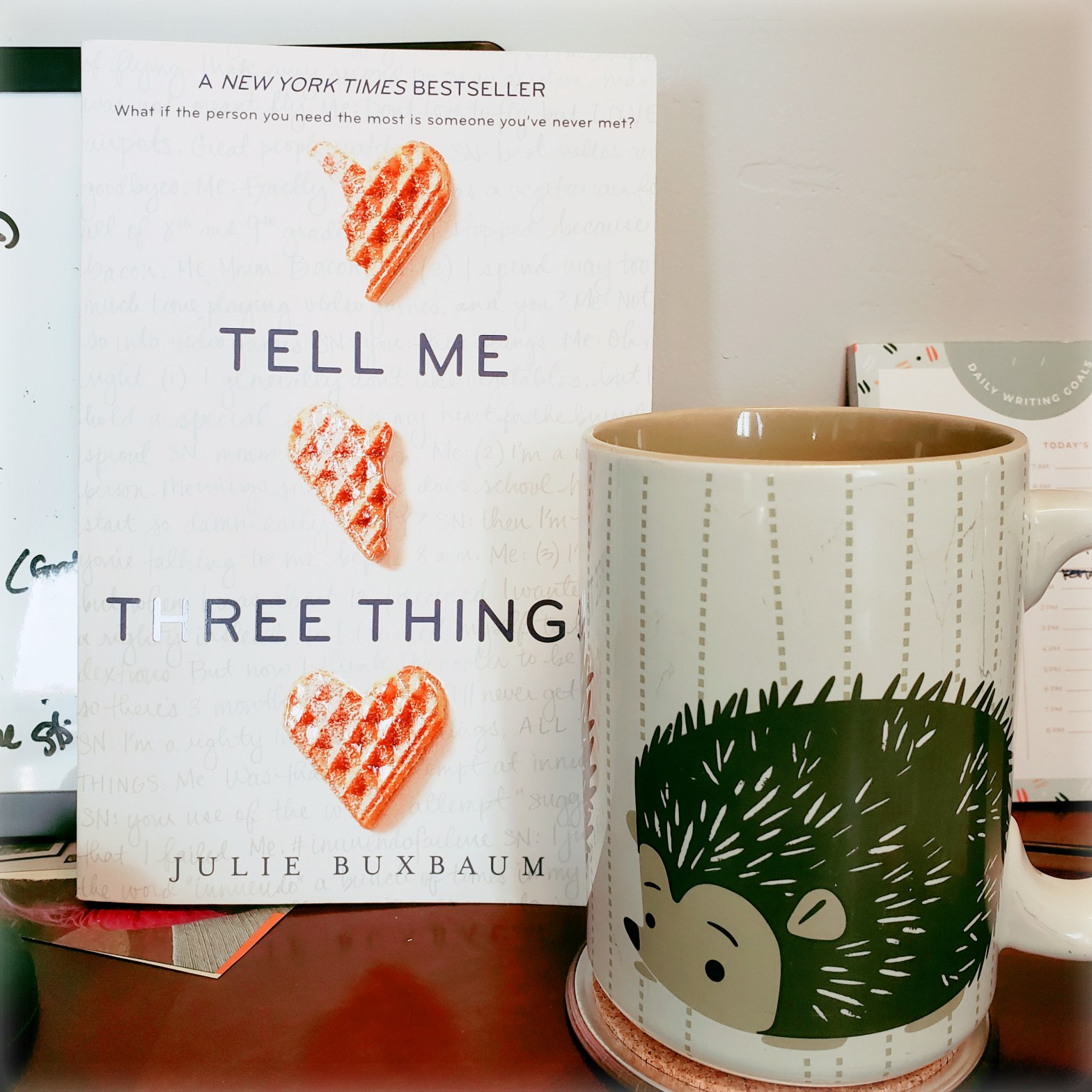
Premise: Jessie’s mom passed away 733 days ago, she’s counting. A bit too soon for her to confront her dad’s news that he is remarrying and they are moving from Chicago to LA. Jessie must start a new school, leave her friends behind, and join another household/family. At a private school for the wealthy (paid for by her new step-mother), Jessie struggles to establish a groove until an anonymous student starts emailing then texting with her. Who is this “Somebody Nobody” with whom conversing is easy and what will become of their relationship? Can you blame her if she’s struggling to feel confident in the midst of so much change?
Rating: 3/5 Target: high school, college
Title: “Tell me three things” derives from a pattern of communication between Jessie and SN (exact identity: unknown) where they begin conversing by telling each other three things about themselves, whether important or unimportant, factual or opinion-based. Record your three things in the comments, and see mine as well.
Motifs (not exhaustive): grief, moving, new kid, step families, adaptation, coming of age, friendship, romance
Great for…* (readers): fans of romance and romantic comedies (like Happily Ever After or the film You’ve Got Mail) who want something fun to read
Great for…* (teachers): students who may be reluctant readers but who get swept up in the drama of high school, free reading, quiet/bookish students
Parental Warnings: some sexual innuendo and referencing, sexual coming of age in minor characters, intermittent cursing
Start a conversation like Jessie and SN: what are three things about you? List in comments and expect a response.
*The “Great for” category is not exhaustive and does not intend to neglect the multitude of readers/teachers who could learn from this book in any number of ways.
RATINGS GUIDE
٭ = DNF, would not recommend ٭٭ = would not recommend ٭٭٭ = enjoyable, would recommend ٭٭٭٭ = very good, would recommend ٭٭٭٭٭ = amazing, would definitely recommend
Outside the lavender home with blue violet trim on Wonky Way Lane, two male rabbits strode nonchalantly down the middle of the road, a road rarely ridden by cars or bikes or even scooters. The inhabitants of the homes on Wonky Way Lane lived, breathed, exercised, baked banana bread, and did not dance much, all inside their homes since the great big and powerful (yet small and slight) Corona Virus began to conquer the world and establish its reign by reining the world in. Each and every home waved the COVID flag in a color designated by the governor and mandated by the virus itself.
So, inside the lavender home waving a purple flag on Wonky Way Lane, K and Z prepared for the day. Observe, Reader, from your safe distance on the far side of the screen lest you spiral into what you discover…
K brushed powder onto her face, a habit that used to be reserved for days she left the house, but was now an everyday occurrence despite the fact she never left.
“What shall we do today, Z?” K asked the reflection in the mirror. “I’m powdered for the process.”
“The same thing we do every day, K,” Z responded. “Escape the world enclosed by these four walls.”
At the mention of such a plan, Rochelle’s cackling filled the walls themselves and pulsed into the boringly beige bathroom.
Z covered her ears.
“Stop, Rochelle!” K hit the wall with the outside of her fist.
The cackling continued.
“RO-Chelle!” K pounded hard enough to bruise the outside of her wrist. In fact, she did bruise the outside of her wrist. K cradled her own hand and Rochelle ceased her cackle with a moan of regret.
“Oh, K,” Z said, “when will you learn?”
“Me?” said K. “It’s Rochelle’s fault.”
The walls creaked.
“Was too!” K yelled.
The walls creaked.
“Too!”
Creak.
“Too!”
Creak.
“Too!”
“ENOUGH, you flibbity gibbets! Rochelle, you know better than to egg K on. She’s not insulated, to insults or anything else, as you are,” said Z.
Rochelle moaned a response.
“I know, I know,” Z told her. “You didn’t insult K, but she’s very tender in this time of isolation. That’s why we must accomplish our goal today.”
“What goal is that, Z?” asked K who had already forgotten Z’s words from a minute before.
“To escape the world enclosed by these four walls.”
“That sounds lovely, Z.” K’s eyelids fluttered like the wings of the butterflies she imagined herself cavorting with in the forest beyond Wonky Way Lane. “How will we do that?”
“That’s what I’ve been working on since yesterday’s Transportationonometeration Machine disaster.”
“Yeah, a disaster,” said K.
“Don’t remind me!” Z exclaimed before muttering to herself something about the feel of paper between her fingers, though K could not compute.
Z tapped her fingertips together as K watched, transfixed. K tried to mirror Z’s motions from the mirror, but she kept missing and grazing the budding bruise on her wrist.
“Ouch.” …. “Ouch.”
“Oh, just leave that to me, would you?” Z said. K stopped trying. “I will tell you the plan for today.”
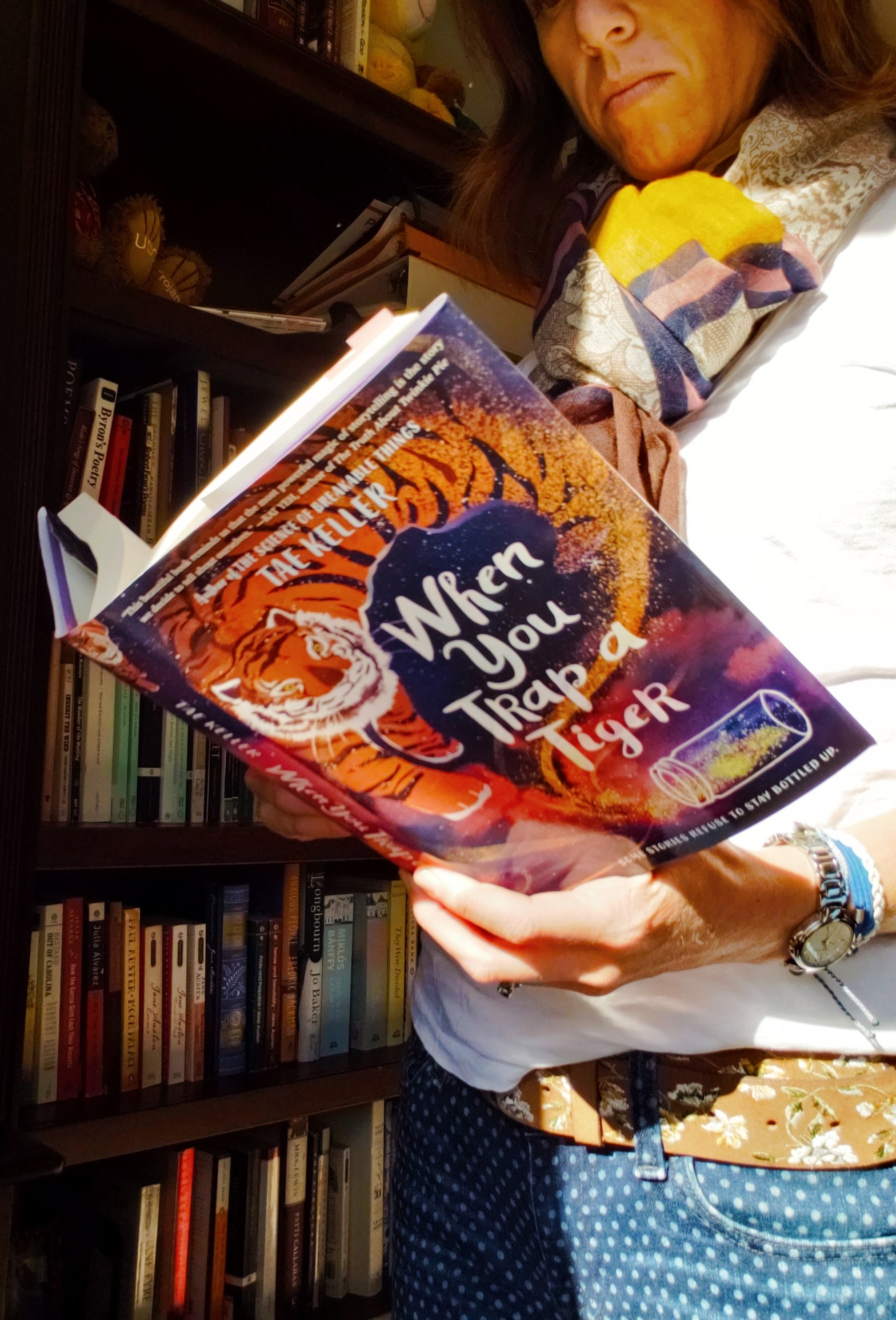
Premise: When Lily, her mom, and her sister move from California to Washington to live with her halmoni, Lily comes in contact with a car-sized tiger who her mom and sister can’t see. The tiger claims Lily’s halmoni stole stories that belong in the stars. Lily must return the stories to the tiger in order to get what she wants from the tiger. But can tigers ever be trusted? Can halmoni? Can her mom or sister? Can she?
Rating: 4/5 Target: 4th-8th grade
Motifs (not exhaustive): Korean folklore, family, female relationships, grief, coming of age, independence, tame vs. wild, captive vs. free, identity, otherness, truth
Great for..* (readers): students who are quiet or feel left out, children dealing with grief or moving
Great for…* (teachers): character development, figurative language, folklore, Asian literature/studies, character contrasts
Other Reviews referenced by KZ in this vlog: Fighting Words, a Newbery Honor book
*The “Great for” category is not exhaustive and does not intend to neglect the multitude of readers/teachers who could learn from this book in any number of ways.
RATINGS GUIDE
٭ = DNF, would not recommend ٭٭ = would not recommend ٭٭٭ = enjoyable, would recommend ٭٭٭٭ = very good, would recommend ٭٭٭٭٭ = amazing, would definitely recommend
The structure is the meaning. The meaning is the structure. The structure’s in the meaning. The meaning’s in the structure. If that’s too much for you, you may want to either skip this read or read it without much care.
I admit it. When I started Anxious People by Fredrik Backman, my first Backman book, I didn’t like it. I didn’t like the short, choppy chapters that read as unique short story submissions to literary journals with flashpoints in the final lines that change the entire reading of the story. Again and again and again. One was good. Two okay. Then, it irritated me. I couldn’t get my feet on the ground of this narrative without having Backman purposely launch me off them.
The interjections of interviews with equally irritating, if not obnoxious, characters proved nothing if not a nuisance.
Precisely as they were meant to do.
This will be a short review (if you can call it that) because I have no intention of revealing the plot resolution of Backman’s book featuring a bank robber without a robbery and a hostage situation with the “world’s worst hostages.” You’ll have to experience the details for yourself. But here is what I’ve come to conclude: despite all that Backman himself will tell you the book’s about (in the text itself, he will use the phrase repeatedly), if you can trust him, the story is about isolation and connection.
The jagged pieces that begin the book are reflections of the characters themselves: intriguing, well-crafted, but ultimately awkward in how they attempt to be more than alone. Because as the reader, I was somewhat lost in the nameless characters and their stories at the start, I found myself like them, weighing whether or not connecting to these characters is worth it. The more they revealed, the less annoying the characters were, and the more I recognized bits of myself in them.
That’s the genius of this narrative. You find yourself in characters who you assumed were nothing like you. You connect with them as Backman transitions from his short, stop-and-go chapters to lengthier ones. Even the shorter interviews reveal connections you may not anticipate and which bolster the meaning of the narrative.
The book is well done and meaningful. It is unusual and unique, like we are, yet immensely relatable, too. Also, like we are. If that seems enigmatic or problematic or paradoxical, well, you’ll just have to read Anxious People to understand what I mean.
Rating: 4/5 Target: adult readership, 16 y.o. (not due to word or subject-matter but due to nuance)
٭ = DNF, would not recommend ٭٭ = would not recommend ٭٭٭ = enjoyable, would recommend ٭٭٭٭ = very good, would recommend ٭٭٭٭٭ = amazing, would definitely recommend
a pinkyandthebrainhomage by KZ Rochelle (of course)
When last we saw K and Z, stuck in the lavender home with blue violet trim on Wonky Way Lane, they were set to begin construction on their plan to escape their four walls through the Transportationonmeteration Machine and head to Tampa Bay.
“Now! My Internet Transportationonometeration Machine! Here are the directions, K. Let’s get to work.” Z held the scroll so that K could see its contents.
“Right-o, Z.”
K read the directions, her finger smudging lines onto the mirror’s glass.
“1 large cardboard box. I’ll grab that.” K ran out of the bathroom and returned with a large box in hand.
“Three inkless pens. Yes, yes.” K pulled two from her back pocket and one from her hair.
“You’ll need the beach-scented candle. It’s very important if we want to get to Tampa Bay,” said Z.
“On the bedside table,” said K.
“Good, good. It’s coming together.” Z tapped her fingers together like the evil genius she was. Even if she wasn’t so evil. Or much of a genius.
They worked together. K gathered supplies, nailing and gluing the bits together. Z directed K. Until they were on the last steps of the process.
“My Internet Transportationonometeration Machine is almost done. Then we will be out of these four walls! Free to go about in the world as we will.”
“As we will what, Z?”
“As we will, K.”
K looked at Z waiting for elaboration.
Z continued. “As we desire. However we like. As we want, K.”
“As we want what, Z? Do we want a teddy bear? Or a blankie? Oh! No! How about some chocolates? I love chocolates. I would want chocolates. Or ice cream! Ice cream from an ice cream shop, Z. Can you imagine? That’s what I will!”
“Very well, K.”
Z calmed K down before noting the last remaining steps.
“All we need now, K, are four silver paper clips.”
“Four silver paper clips,” repeated K.
“Yes, four silver paper clips.”
K looked at Z. Z looked at K.
“Four silver paper clips?”
“Yes! Four silver paper clips! That’s what I said, K! Four silver paper clips!”
“Are you joking, Z?”
“Do I look like I’m joking, K?” Z’s face set in. Her eyes narrowed. Her brows furrowed.
“Don’t know,” said K. “What’s joking look like? I only know what it sounds like.”
“Good grief,” said Z, turning her face away in disgust.
“Z, this is what a joke sounds like. What kinds of dogs love car racing?” K paused.
Z did not respond. She did not even look K’s way.
“Lap dogs!”
K guffawed.
“How about this one? How about this one? What streets do ghosts haunt?”
Still, K did not respond.
“Dead ends!” K guffawed again, pounding down on her knee.
Z looked at K. She waited.
“Are you quite done now?”
“Almost, Z. Because that’s what a joke sounds like.” K checked her knee for bruises. “I’m set now.”
“The four silver paper clips then,” Z said.
“Ain’t no such thing,” K said.
“Of course there’s such a thing,” said Z.
“Naw, ain’t no such thing,” said K.
“They’re those little curled up metal wires that hold your papers together, K!”
“I know what they is, Z. No one’s got them anymore. On account of no one uses paper. Everyone is virtual. Virtual working. Virtual learning. Virtual dancing. Virtual cooking. Virtual passing over and virtual Christmas with virtual presents. No one’s got paper clips.”
“Are you saying that no one includes us? As in we don’t have them, K?”
K emphasized we just as Z did. “We don’t have them, Z.”
“Then we can’t finish the Internet Transportationonometeration Machine. And if we can’t finish the Internet Transportationonometer Machine, we can’t get on the other side of the screen. And if we can’t get on the other side of the screen, we cannot escape the confounding confines of these four walls.”
K watched Z pace through the mirror.
“Is that a bad thing, K?” Z asked.
“It means we’ve failed, K!”
“Failed at what, Z?”
“Escaping these four walls, K.”
“But we got to hear Rochelle. And gather these goodies like a scavenger hunt. And make this Transmutation Machine. And tell good jokes. And…”
K went on and on. But Z was not listening. She’d begun pondering the activities for tomorrow.
“…and we still have a Zoom!” said K.
“Not me, K.”
“I still have a Zoom!” said K.
K ran to the nearest tablet, logged on, and proceeded to make silly faces at her nephew for the next hour.
While K was thus employed, Z stayed inside the looking glass in the bathroom in the lavender house with blue violet trim on Wonky Way Lane.
She muttered to herself, thinking through details for tomorrow’s plans, when they would try to escape the confines of these four walls.
Will K and Z escape their four walls with tomorrow’s plan? Find out in the next installments in The Days of Our Pandemic...



 KZ Rochelle