
Backwards Planning, from an Educator, for All: a 7 step process

I’ve been trained as a teacher and worked in education since I was approximately twelve years old, and backwards planning is a phrase that regularly emerges in meetings. Instead of creating lessons that build into tests etc., backwards planning starts with the goals for students, then creates assessments, and works backwards from there to lesson plan and place all of this on a calendar — before state testing.

If you want to try backwards planning, take out your calendar and your journal (or a scratch piece of paper) and follow these steps.

  1. Brainstorm Your Goals. Sometimes this is simple — like, for our family, the goal was to get to Switzerland with all that we needed and no more. It’s not always that simple. Maybe you have a language learning goal or a fitness goal or a legacy goal. You may have several goals. If so, try to group them into categories, and backwards plan for each of those categories. Decide when you plan to achieve this goal and write it down.
  2. Determine What Marks a Completed Goal. You’re probably not going to be taking a test or writing an essay to earn a passing grade, so what will you do? How will you know you have or have not accomplished your goal? If you’re like me, I like to manufacture a test of sorts. For a fitness goal, I might set a date for a fitness test, which also means I have to research different tests.
  3. Create Benchmarks Along the Way. These are status checks or mini-goals within the major goal, because life happens, things happen, plans do not always work the way we expect them. We can underestimate our progress or overestimate our progress. Record the dates for these check-ins.
  4. Write the Lesson Plans, Fill in the Process. With the previous steps, you’ve got several dates recorded. Now, the day-to-day details come into play. What items have to happen on any individual day to get to the benchmarks?
  5. Establish Ground Zero. When does the plan begin? Some plans have a step before they actually begin, where you need to establish your current location before you can build.
  6. Sanity check. Is this plan do-able? reasonable? achievable? If not, revise it because you will give up if you can’t feel successes along the way.
  7. Go Time.

Vlog Review: Taking Up Space

Hit Play on the video above.

The Best Thing about this Book is that the perspective gives you a window into what it’s like to devolve into unhealthy body image beliefs, eating habits, etc.. BUT IT MIGHT ALSO BE the coach.

Premise: Sarah’s love of basketball drives everything in her life: from friendships to food. But when her body is performing the way she wants it to, and her friendships are knocking into problems, how will she respond? Especially when she’s feeling like she doesn’t always matter to her mom, who sometimes forgets meals, and her dad, who travels a lot.

Rating: 4/5
Target: 6-9

Title: The title references a history of women literally taking up less space than men, even making themselves smaller. It deals with body image and body size as well as positioning on a basketball court.

Main Character(s): Sarah, 7th grade (she/her)

Motifs (not exhaustive): food, body image, basketball, friendships, crushes, cooking, therapy, family, mother-daughter relationship, reading, health

Great for…* (readers): who have a friend or family member who suffers an eating disorder or disordered eating and for female athletes.

Great for…* (teachers): discussion around societal norms/expectations and pressures teens feel.

Parental Warning(s): I’m not sure I would send a kid, especially a target-age-range girl off to read this alone. Get into the weeds with this one.

Interact: Sarah develops a passion for cooking. What’s your favorite thing to eat and/or recipe to cook it?

Shop local bookstores.
Shop Amazon.
Add on Goodreads.

*The “Great for” category is not exhaustive and does not intend to neglect the multitude of readers/teachers who could learn from this book in any number of ways.

RATINGS GUIDE

٭ = DNF, would not recommend
٭٭ = would not recommend
٭٭٭ = enjoyable, would recommend
٭٭٭٭ = very good, would recommend
٭٭٭٭٭ = amazing, would definitely recommend

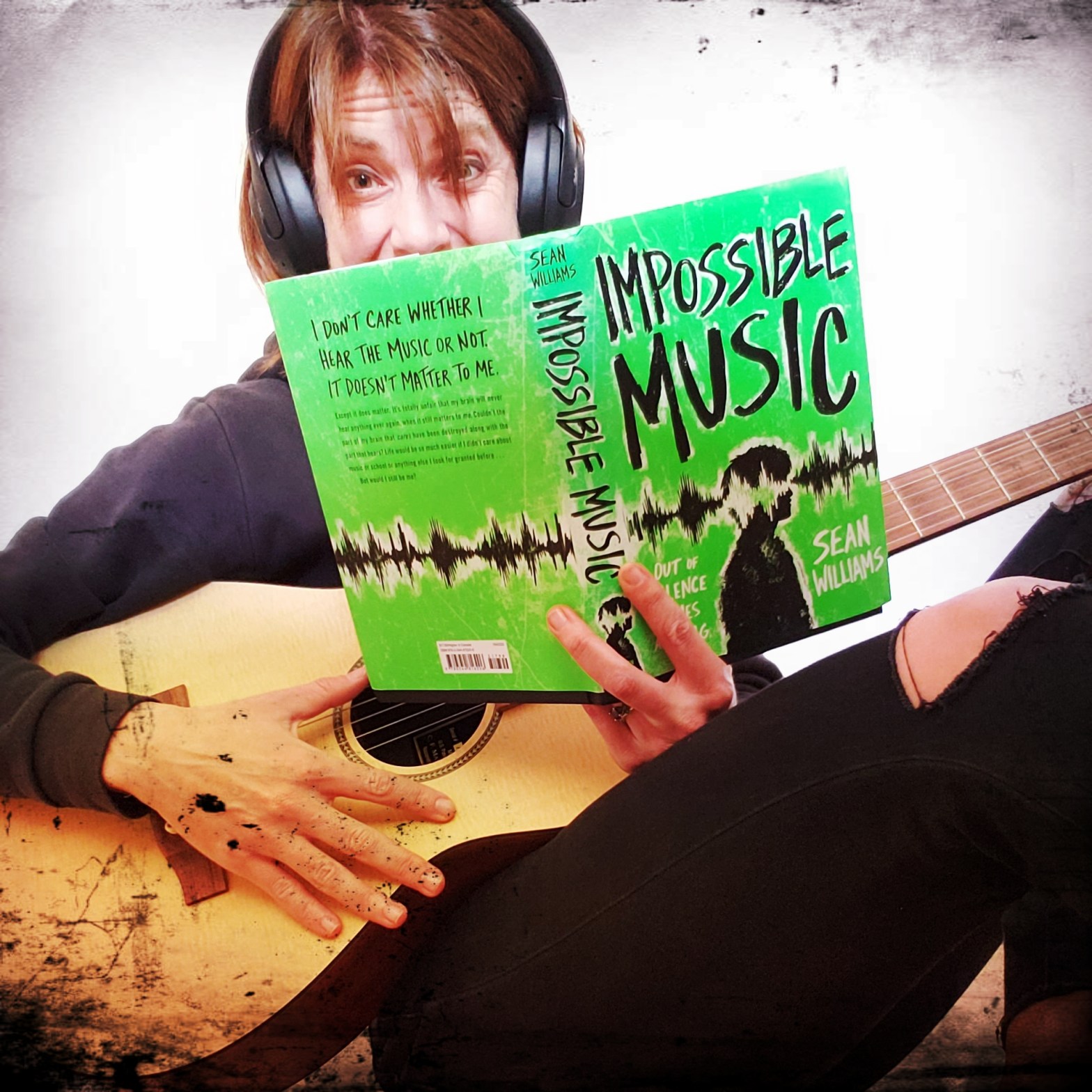
Vlog Review: Impossible Music

Hit Play on the video above.

Premise: Simon is a musician. But he can’t hear. So how can he continue to study music, create music, play music? And, most of all, experience music he will never hear again? Everything about music seems impossible to him. If Simon is going to have a happy life, he’s going to have to accept his new sensations and his new modes of communication — but can he?

Rating: 3/5
Target: 9th-12th grade

Title:  The first thought about where the title comes from is the premise. And it seems, for much of the book to be just that, but there’s more to it that has to do with a performance I won’t get into because I don’t want to spoil anything.

Main Character(s): Simon, 18 y/o (he/him)

Motifs (not exhaustive): identity, music, communication, Deaf culture, art, Auslan, sign language, family, teen relationships, health, mental health, depression, suicide, dreams, commitment, courage, community

Great for…* (readers): who love music or medicine or Deaf culture (or want to learn about any of those). Simon is a bit detached to begin with, so it takes a while to get into the read.

Great for…* (teachers): This one is a pretty easy read. It’d be best used in small reading groups where you have a variety of elements you’re looking at — no one thing stands out in this one.

Parental Warning(s): Some cursing, regular physical intimacy (not seen or described)

Interact: Why would (or wouldn’t) you want to perform in front of a crowd?

Shop local bookstores.
Shop Amazon.
Add on Goodreads.

*The “Great for” category is not exhaustive and does not intend to neglect the multitude of readers/teachers who could learn from this book in any number of ways.

RATINGS GUIDE

٭ = DNF, would not recommend
٭٭ = would not recommend
٭٭٭ = enjoyable, would recommend
٭٭٭٭ = very good, would recommend
٭٭٭٭٭ = amazing, would definitely recommend