Leg 6: Departure Delayed

“What happens to a dream deferred? Does it dry up like a raisin in the sun?”

Those questions belong to one of my favorite poets, Langston Hughes, and from one of his most famous poems, “Harlem,” though they are not nearly all the questions he poses in that poem. I taught the poem any chance I could over my nearly 15 year teaching career, including when we read A Raisin in the Sun by Lorraine Hansberry, so I’m aware its meaning is not about moving to another country — at least, not in a literal sense. I’ve analyzed it with 7th-graders, 8th-graders, 10th-graders, and 11th-graders. It never fails to impact with its imagery or its meaning.

So when our departure to Switzerland was delayed, my mind associated the alliteration of delayed departure with dream deferred and noticed the several similarities. And what happened to our departure deferred?

Well, it didn’t dry up like a raisin in the sun. Nor did it fester like a sore and then run. It didn’t even stink like rotten meat! (Have I grossed you out enough to study the poem yet? It’s short and relatively simple — at face value. But. Don’t forget the title. In poetry, always come back to the title.)

Despite the fact that our visas had not come through in order for Husband to start his Swiss job April 1, nor for the family to depart in late-March as planned, we came to an agreement with the company that they would sponsor our rent from April 1 through to the departure date — now slated for late-April. With hope that the visas would soon come through, we planned a new start date for Husband’s position, May 1. A one month delay.

“Yeah, they better be fronting the bill for our rent — and any changes in the cost of our flights. We did exactly what they told us to do.” I confessed to Husband, revealing my letter of the law approach to the professional world — which I’m not always proud of.

Husband glossed over my subtle ire. “What do you think about spending that time in Europe? The time from April 1 to April 20th or so? I haven’t booked our new tickets to Zurich, so we could use that time to travel and get acclimated to a more European timezone. Maybe we could spend a week in Italy or Germany beforehand.”

Photo by Lara Jameson on Pexels.com

“That sounds pretty awesome,” I said, “but will it mess with our visa process?”

“Okay, well, if that’s the case, what if we split the travel time.”

“What does that mean?”

“We could go to the East Coast to divide the flight into two. Go to Boston or something — “

“I love Boston!”

“I know. We could spend a few weeks there and then the travel time gets split. It’ll no longer be such a massive travel day or such a massive time change to adjust to.”

“I am all for that. I haven’t been to Boston in — gosh, twenty years.”

Back to Beantown — with its Charles River, Duck Tours, and Freedom Trail. I’d show my kids where I lived, a block from the original Cheers. And they’d want to see the show because they will have never heard of it before. It sounded great: a return to my college town, my country’s birthing pangs, then off to a European life. It’d be symbolically parallel and therefore poetic. I went to a new coast to start a new life that would lead to a new career when I was eighteen. Now that I’m (throat clear) not eighteen, I could do that much better: I’d go to a new continent to start a new life that will lead to a new career. Ahhhh, a symmetry that’s soothing.

Boston Common. Original image Carol” by Carol M Highsmith/ CC0 1.0

Moving to a new country where you don’t speak the language, don’t know the customs, don’t know the history, don’t even know the system of government like you do your country of origin is not a soothing experience. Boston sounded good.

Tickets to Boston cost nearly as much as tickets to Zurich for the timeline needed to be out of our home before April 1 and in Switzerland before May 1. Without an income until Husband started his job, that seemed unwise. So, instead of returning to my college town, we returned to my first teaching town and lived a few blocks from the Pacific Ocean until we departed. Not a bad deal.

Given that I grew up in the adjacent town, the return to the stomping grounds of my educational upbringing (both as the recipient and deliverer of education) brought a stunning juxtaposition. Here, in Southern California, blocks from the beach, I knew every block. I knew which houses had been painted, where to get the best breakfasts, the shortcuts and secret parks, all without having to think about it. In Zurich — oy. How many miles — scratch that — kilometers to the ocean? What do they even eat for breakfast? Bratwurst? Isn’t that German? I don’t know what Swiss food is! Oh my goodness. I am going from completely comfortable and confident to, there’s no better way to say it, inept and idiotic. Or at least feeling that way.

No, no. Stop that. Think of it on a bigger level. As not just you, KZ, as a part of a unit. This was the place you met your family, where you met Husband (or so he says because I don’t remember it). We will launch from our starting place to a new start.

Given the means, the time, the flexibility, and the freedom, maybe that’s what happens to a dream deferred. It takes a turn and bursts onto a new tangent. The anger and the fear of the early days of deferral shadow every thought and decision early on, but that settles. We were lucky enough to have circumstances cleared relatively quickly. And a month is not that long to delay a departure, let alone to defer a dream. It’s nothing like a lifetime. Or many lifetimes.

What happened to our dream deferred? It combusted into a new starting line, in a new language, with the same old sound of the gun. It ran ’round, stepping in paces paved by the past and it built up speed to leap —

And, like most leaps into the unknown, we had a sense of where we were heading, but no idea where we were going; we knew our time of arrival, but had no idea when we’d set our feet on the ground.

We have since landed in Switzerland. The travel was both a nightmare and better than expected, the experience in customs, one I hope to forget. But we are in Zurich, living in our temporary apartment, looking for one of our own, and back in the Holy-Moly list of tasks that need completing — this time, from the other side of the world.

Once we are settled, we plan to go on semi-regular excursions — and tell you all about them. To keep track of where we go, visit the Travel Log section of this site, comment with where you think we ought to go or what you want us to tell you about when we’re there, and, of course, subscribe! .

One of the pups, having flown in the cabin with KZ, looking out the window as we landed in Zurich in April. The other pup had to travel in a crate below — but he’s okay now.

Leg 3: Decision Revisited

I read Of Mice and Men as a high school freshman. Despite going on to be a Literature major, reading several more Steinbeck novels (some more than once), that first book remains the only Steinbeck I’ve enjoyed. Perhaps it’s the length of it, or the ubiquity of the references to Lennie and his strength, or just Lennie himself. I’m drawn to his innocence, his good intentions, and the complexity that with his sweetness and innocence, he’s often a threat. He embodies the notion that what we don’t know can hurt us.

Photo by Yaroslav Shuraev on Pexels.com

We rejected the Zurich offer because Zurich had become a threat to us. To the education and the future of our children on the one hand, and to the death of a shared dream on the other. It looked to be a dead end.

Only this was a dream that wouldn’t quite die off. Through holiday travel and the ringing in of 2024, my husband continually brought up feelings of lament around the Zurich position.

“It’s really too bad…” he’d say.
“I wish they’d been able to offer…” he’d say.
“If only there were some other way,” he’d say.

And I’d sit torn between reflecting his lament back to him and encouraging him to move forward with his job search. Until he said, “I found another education consultant in Zurich.”

With intrigue and doubt, I responded, “Yes?”

“I want to have a consultation with her. The consultation is free. So, really, there’s no risk. We can see if she agrees with the other consultant, and, if she does, done deal. So long Zurich.”

“And if she doesn’t?” I asked, anxious about where the answer could lead.

“Well, if she thinks the kids could go to public school and still end up being able to attend university, I think I will contact HR at the company and see if I can have more time to think about it.”

I sat silently. Thinking. If several consultants note the impossibility, it could help him move on….

“What do you think?” Husband asked.

I shrugged my shoulders and raised my eyebrows in tandem with them, letting them all fall in unison. “Why not? The worst that can happen is they say no.” But, I thought to myself, I bet they wouldn’t. Not after all they’d invested in him.

Another 6:00 AM meeting with an education consultant later, Husband and I were convinced.

“It would not be easy,” said this second consultant. “You must have children who are really very unusual. They must work very hard. Even the Swiss children must work very hard. But to catch up and do gymnasium, this would be so difficult. I think, if you are very supportive of them, and you think they can do it, perhaps maybe they can.”

“Our kids are rather atypical,” we said. “They are bright and motivated, well-rounded and kind.”

“I want you to know,” I told her, “that when I say my children are unusual, I mean that in a very good way. And I do not say that just because I am their mother. I am a teacher. I see hundreds of students their age every year. I have taught my oldest son in my classroom, and teachers go out of their way to comment on how wonderful my youngest son is. But what is more, I did not give birth to them. They are not genetically mine. I do not see my children with the rose-colored glasses many mothers see their own children. Still, I can say they are exceptional.”

“If you are willing, then we will have to do some work. I will speak with the Zurich schools and see when it would be possible for them to take the gymnasium test. It will all be in German. So, in the meantime, you get a tutor for them. They must learn German. And some French, too, but German is the most important. I will also ask about them being given a trial year, so they can catch up their German even more — and maybe, by the end of that one year, they have to take a test again or something to prove they are in the right placement.”

“Intellectually,” we told her, “there’s no question. The challenge will be language acquisition.”

“Yes. Okay then,” she told us.

Photo by Skylar Kang on Pexels.com

Yes. Okay then. Time to contact the company to request an extension, allowing us to consider more options. Since it was January by this time, schools in Zurich were back in session, and we could contact them directly, making the whole process a bit easier.

After Husband got a green-light on the extension to consider the job offer, he spoke with friends who had once lived in Zurich to get information about the education system, the culture, the workforce etc.. I spoke with my teacher-neighbor, who was raised in Switzerland. Everyone said, “My goodness! Even if they do not get into gymnasium, they can still be very well educated in the apprenticeship system and go to university if that’s the path they choose. It might take them longer, though.”

“Oh, really?”

“Yes, they can even intern in a programming position or something that would be very useful that they may not learn at gymnasium anyway.”

“Hmmmm….”

Husband, now done with his job from 2023, put extra time into figuring out more about the Swiss/Zurich education system. Then, when I got home from school, he and I went for a daily walk around the block to discuss the current status of what was or was not possible, what was discovered, and what tossed out — as well as draw some conclusions together. We called it the Zurich Tete-a-Tete on our shared calendar, or, more informally, our Zurich Talk Walk.

We hired the consultant, the second one. She requested I send her transcripts and information about what levels of math my sons had taken before we met with her again so that she could pass it onto those in charge in the city of Zurich, to show them how wonderful our children were.

I gathered the information and sent the document that day so that we could meet again as soon as possible.

When we did meet again, the consultant informed us, “Yes, it is good with Mrs. S. She will let the children have a trial year if they pass the test. But, she said they must be able to do B1 German.”

Photo by Fco Javier Carriola on Pexels.com

[Okay, time out. More about language. I took Spanish through 11th grade, opting out of AP Spanish my 12th grade year. I can get by in Spanish, and so I tell people I speak a little bit of Spanish. Which is true. But what does that mean when you hear it? Does it mean I can say hello, goodbye, thank you, and where is the bathroom? or does it mean I can write a letter and read a children’s book?or does it simply mean I’m not a native speaker but I am fluent? It depends entirely on the speaker because that person is calibrating their language ability for you. Then you have the same opportunity to interpret the phrase, regardless of how the speaker meant it. Did they mean they can say hello, goodbye, thank you, and where is the bathroom? or does it mean they can write a letter and read a children’s book? You see the problem.
Being a teacher, seeing a large swath of society, I can tell you with confidence, those who are perfectionists will undermine their abilities, and those who are trying to impress will exaggerate them.

[It is not this way in Europe. There, they use the Common European Framework of Reference (CEFR), which offers actual tests and certification, to declare someone’s language level. There are beginner levels, A1-A2, intermediate levels, B1-B2, and advanced levels, C1-C2. Instead of telling you I speak a little Spanish, I can tell you, I test at the B1 and B2 depending on the test and the day. For the boys to attend gymnasium for a trial year, they were to go from no German in December to B1 German in spring. That’s rough. It’s the equivalent of being a bit behind where I am in my Spanish despite their having a few months whereas I had a few years — admittedly with many years of forgetting since.]

Husband and I discussed it in our Zurich Talk Walk. If the boys don’t meet the language requirement, they go to secondary school and get to try to get into gymnasium at the end of the year anyway. That’s fine. BUT — for Older Son, that may well mean repeating a grade. If we could get him on board with that, we could say yes.

As further proof of my atypical children, not only did Older Son say he’d be willing to repeat a grade, so did Younger Son!

Husband and I took our Zurich Talk Walk around the block and decided. Let’s do this. It’s too big. Too possible. Even with things that could go wrong, we could come back if necessary. It would be one heck of an adventure, no matter what. Otherwise, we would be left forever wondering what may have happened, what we may have achieved or experienced. And that was a regret we weren’t willing to live with.

The threat of Zurich had faded, and everything around it turned into potential and possibility. Even if it was a terrifying possibility, it was also a thrilling possibility. Any threats we’d seen before transfigured into pathways, different journeys, none of which lead to despair, darkness, or death.

If you know Of Mice and Men by Steinbeck, you know it’s filled with death. Lennie often kills beings unintentionally. What you may not know is that the title wasn’t created by Steinbeck himself, nor was he the last to use it. The title comes from an 18th century poem by Robert Burns called “To a Mouse.” (You may read it if you have an affinity for Scottish poetry.) You are likely more familiar with Kurt Vonnegut, whether or not you’ve read his work, who, twenty or thirty years after Steinbeck’s novel, wrote, ” Of all the words of mice and men, the saddest are, ‘It might have been.'”

The narrative of George and Lennie is one of might-have-beens. The story of my family as ex-pats in Europe will transform from potential to actual. This blog invites you to witness the actualities with us.

What do you say? Are you ready to travel with us?

Photo by Element5 Digital on Pexels.com

We had a LOT to do before traveling — find out about the next steps before departure in the next leg!

Next

Vlog Review: Other Words for Home, a novel in verse

Hit Play on the video above.

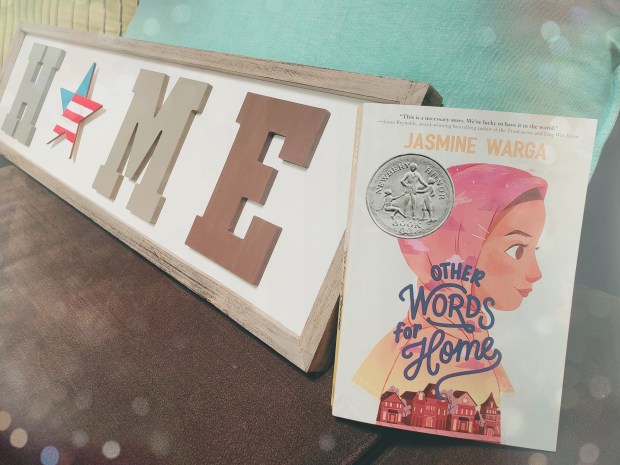
Premise: Division erupts in Jude’s hometown in Syria, causing her brother to side and react differently than her father and sending Jude and her mother to live with family in Ohio. Jude needs courage to leave Syria and begin a life in the U.S. but she also needs courage to face a culture that sees her as someone who does not belong, as someone “middle eastern,” and figure out what home really means when everything is different than it was before.

Rating: 4/5
Target: 4-7

Title:  Jude must improve her English skills while living as a refugee in the United States, so the title can be taken literally, but there’s much more to the concept of home than a word.

Main Character(s): Jude, 12 y/o (she/her)

Motifs (not exhaustive): culture, hope, home, bravery/courage, war, change, terrorism, war, dislocation/refugees, language, middle eastern/syria, anti-refugee behavior, EMPATHY

Great for…* (readers): who appreciate deep thinking OR who are intimidated by the text on a page (as this book is written in verse).

Great for…* (teachers): Symbolism and discussion, discussion, discussion. There is so much in this book that lends itself to deeper meaning than just the words on the page (thereby also playing into the motif of language/communication). The book can be used to challenge preconceived notions and assumptions, so, again: discussion!

Parental Warning(s): Anti-refugee behaviors and words but no cursing

Interact: Who or what means home for you? (Consider sights, scents, textures, etc.)

Shop local bookstores.
Shop Amazon.
Add on Goodreads.

*The “Great for” category is not exhaustive and does not intend to neglect the multitude of readers/teachers who could learn from this book in any number of ways.

RATINGS GUIDE

٭ = DNF, would not recommend
٭٭ = would not recommend
٭٭٭ = enjoyable, would recommend
٭٭٭٭ = very good, would recommend
٭٭٭٭٭ = amazing, would definitely recommend

Vlog Review: Right as Rain

Hit Play on the video above.

Premise: It’s been 278 days since Rain’s brother Guthrie died, and Rain and her parents are moving 288 miles to have a fresh start (even if her mom is the only one who wants one). What happened that night is a big who knows to everyone except for Rain, but that secret means Guthrie’s death is her fault. With her secret and very few other items packed, Rain moves to NYC to process through the loss of her brother and the degradation of her parents’ marriage while she tries to fit into a new environment where she’s off on the wrong foot. (Check out the motifs section, there’s a ton of issues brought up by this book — and all well done.)

Rating: 4/5
Target: 4-8

Title: The title’s meaning remains open to numerous interpretations — so it’s a great discussion point post-read. I’ll wait for you to tell me your interpretation before I divulge mine.

Main Character(s): Rain Andrews, 11 y/o (she/her)

Motifs (not exhaustive): grief/loss, depression, friendship, moving, change, divorce/separation, gardening, teamwork, community, homelessness, gentrification, otherness/belonging, poetry

Great for…* (readers): who have friends experiencing grief. As a mother of kids with nuclear family member loss, I want to give this book to all their friends so that they get an inside perspective of what it’s like. Also good for kids who feel alone, different, isolated, or are experiencing change.

Great for…* (teachers): This book is rife with figurative language and symbolism. It even weaves poetry in (as a school assignment), so it’s kind of asking for work on that front. Many allusions to The One and Only Ivan make for a great pairing if Ivan comes first.

Parental Warning(s): For children who have experienced death of a nuclear family member, this book could stir up difficult emotions.

Interact: Rain runs to wipe her thoughts away and empty her brain. What works for you?

Shop local bookstores.
Shop Amazon.
Add on Goodreads.

*The “Great for” category is not exhaustive and does not intend to neglect the multitude of readers/teachers who could learn from this book in any number of ways.

RATINGS GUIDE

٭ = DNF, would not recommend
٭٭ = would not recommend
٭٭٭ = enjoyable, would recommend
٭٭٭٭ = very good, would recommend
٭٭٭٭٭ = amazing, would definitely recommend

Poetry: Faustus in his Study

I like art museums, so call me a nerd. You wouldn’t be the first.

It started in Boston, like several of my hobbies, as an assignment to visit the MFA. While the art students sketched in their journals, I wrote. I lament, in this shut-down world, the ability to go to an art museum, to be in the presence of an original, to stare and study and consider every movement in it. And, of course, the story of it.

I came across this poem, written many years ago while at an art museum viewing Rembrandt’s Faustus in His Study, in my journal. Read it. Then comment:
a) What I could improve/what you like
OR
b) Where you most miss visiting (or maybe not most miss just miss — no judgments)

Faustus in His Study

Faustus, Faustus
Glowing grandly
Spreading soundly
Your own dark light
Watching, waiting,

Waxing impatient
By your soul’s own
Grand Delight.
Faustus, Faustus
Staring starkly
As the magic disk revolves
Never noting
Naught before thee

But your own design to grow.
Pride, Impatience
Desire for Greatness
You’ve wound yourself into
The disk that flows.
Spinning, it’s spun you
Woven, it’s won you
To its delights to keep you
Alone.
Alone, you are
Alone, you aren’t.
You are man
Caught among men
Guided by the same sin.

Get the print by Rembrandt.
Read my favorite Faustus, Dr. Faustus by Christopher Marlowe.