Leg 3: Decision Revisited

I read Of Mice and Men as a high school freshman. Despite going on to be a Literature major, reading several more Steinbeck novels (some more than once), that first book remains the only Steinbeck I’ve enjoyed. Perhaps it’s the length of it, or the ubiquity of the references to Lennie and his strength, or just Lennie himself. I’m drawn to his innocence, his good intentions, and the complexity that with his sweetness and innocence, he’s often a threat. He embodies the notion that what we don’t know can hurt us.

Photo by Yaroslav Shuraev on Pexels.com

We rejected the Zurich offer because Zurich had become a threat to us. To the education and the future of our children on the one hand, and to the death of a shared dream on the other. It looked to be a dead end.

Only this was a dream that wouldn’t quite die off. Through holiday travel and the ringing in of 2024, my husband continually brought up feelings of lament around the Zurich position.

“It’s really too bad…” he’d say.
“I wish they’d been able to offer…” he’d say.
“If only there were some other way,” he’d say.

And I’d sit torn between reflecting his lament back to him and encouraging him to move forward with his job search. Until he said, “I found another education consultant in Zurich.”

With intrigue and doubt, I responded, “Yes?”

“I want to have a consultation with her. The consultation is free. So, really, there’s no risk. We can see if she agrees with the other consultant, and, if she does, done deal. So long Zurich.”

“And if she doesn’t?” I asked, anxious about where the answer could lead.

“Well, if she thinks the kids could go to public school and still end up being able to attend university, I think I will contact HR at the company and see if I can have more time to think about it.”

I sat silently. Thinking. If several consultants note the impossibility, it could help him move on….

“What do you think?” Husband asked.

I shrugged my shoulders and raised my eyebrows in tandem with them, letting them all fall in unison. “Why not? The worst that can happen is they say no.” But, I thought to myself, I bet they wouldn’t. Not after all they’d invested in him.

Another 6:00 AM meeting with an education consultant later, Husband and I were convinced.

“It would not be easy,” said this second consultant. “You must have children who are really very unusual. They must work very hard. Even the Swiss children must work very hard. But to catch up and do gymnasium, this would be so difficult. I think, if you are very supportive of them, and you think they can do it, perhaps maybe they can.”

“Our kids are rather atypical,” we said. “They are bright and motivated, well-rounded and kind.”

“I want you to know,” I told her, “that when I say my children are unusual, I mean that in a very good way. And I do not say that just because I am their mother. I am a teacher. I see hundreds of students their age every year. I have taught my oldest son in my classroom, and teachers go out of their way to comment on how wonderful my youngest son is. But what is more, I did not give birth to them. They are not genetically mine. I do not see my children with the rose-colored glasses many mothers see their own children. Still, I can say they are exceptional.”

“If you are willing, then we will have to do some work. I will speak with the Zurich schools and see when it would be possible for them to take the gymnasium test. It will all be in German. So, in the meantime, you get a tutor for them. They must learn German. And some French, too, but German is the most important. I will also ask about them being given a trial year, so they can catch up their German even more — and maybe, by the end of that one year, they have to take a test again or something to prove they are in the right placement.”

“Intellectually,” we told her, “there’s no question. The challenge will be language acquisition.”

“Yes. Okay then,” she told us.

Photo by Skylar Kang on Pexels.com

Yes. Okay then. Time to contact the company to request an extension, allowing us to consider more options. Since it was January by this time, schools in Zurich were back in session, and we could contact them directly, making the whole process a bit easier.

After Husband got a green-light on the extension to consider the job offer, he spoke with friends who had once lived in Zurich to get information about the education system, the culture, the workforce etc.. I spoke with my teacher-neighbor, who was raised in Switzerland. Everyone said, “My goodness! Even if they do not get into gymnasium, they can still be very well educated in the apprenticeship system and go to university if that’s the path they choose. It might take them longer, though.”

“Oh, really?”

“Yes, they can even intern in a programming position or something that would be very useful that they may not learn at gymnasium anyway.”

“Hmmmm….”

Husband, now done with his job from 2023, put extra time into figuring out more about the Swiss/Zurich education system. Then, when I got home from school, he and I went for a daily walk around the block to discuss the current status of what was or was not possible, what was discovered, and what tossed out — as well as draw some conclusions together. We called it the Zurich Tete-a-Tete on our shared calendar, or, more informally, our Zurich Talk Walk.

We hired the consultant, the second one. She requested I send her transcripts and information about what levels of math my sons had taken before we met with her again so that she could pass it onto those in charge in the city of Zurich, to show them how wonderful our children were.

I gathered the information and sent the document that day so that we could meet again as soon as possible.

When we did meet again, the consultant informed us, “Yes, it is good with Mrs. S. She will let the children have a trial year if they pass the test. But, she said they must be able to do B1 German.”
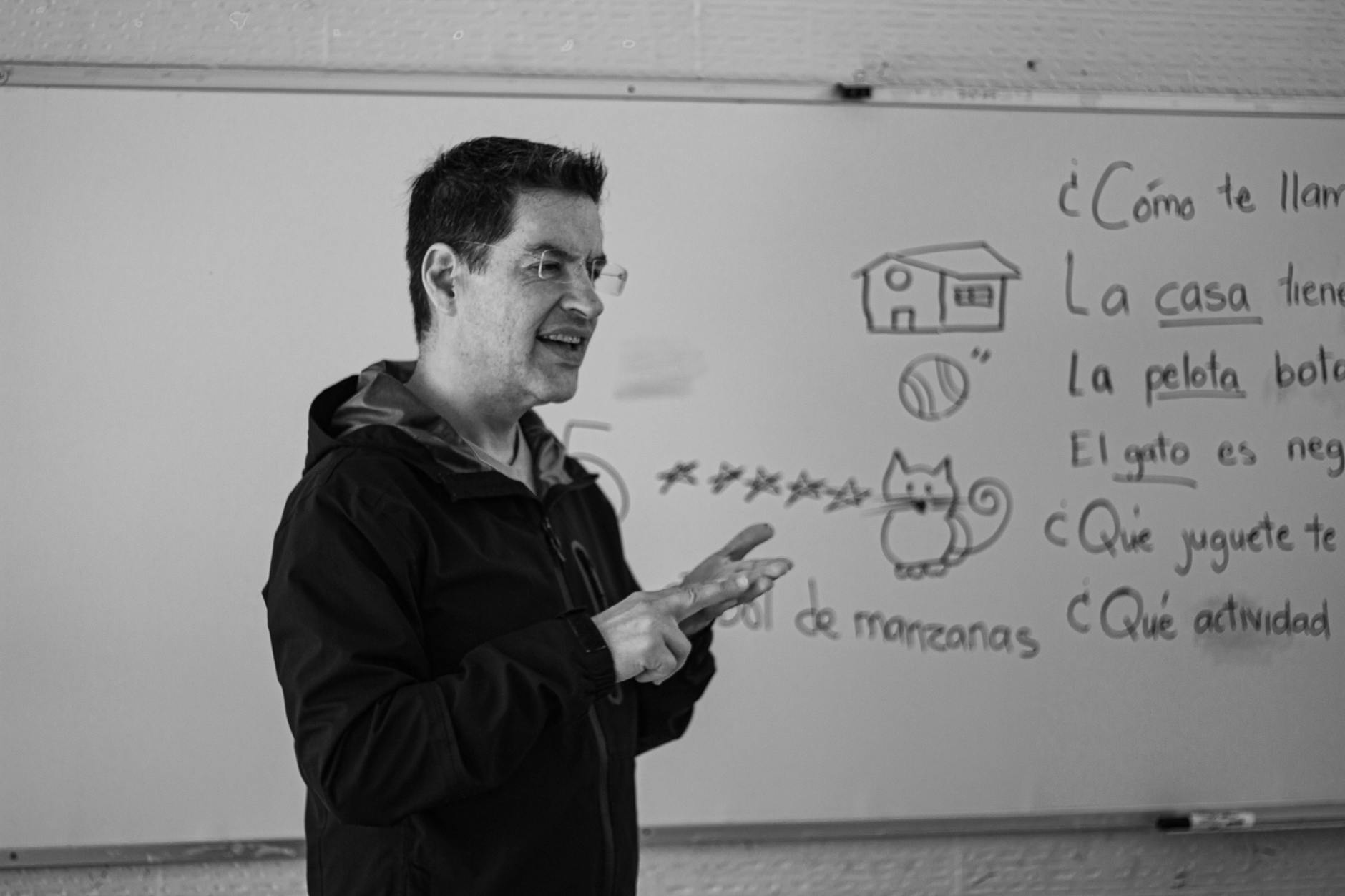
Photo by Fco Javier Carriola on Pexels.com

[Okay, time out. More about language. I took Spanish through 11th grade, opting out of AP Spanish my 12th grade year. I can get by in Spanish, and so I tell people I speak a little bit of Spanish. Which is true. But what does that mean when you hear it? Does it mean I can say hello, goodbye, thank you, and where is the bathroom? or does it mean I can write a letter and read a children’s book?or does it simply mean I’m not a native speaker but I am fluent? It depends entirely on the speaker because that person is calibrating their language ability for you. Then you have the same opportunity to interpret the phrase, regardless of how the speaker meant it. Did they mean they can say hello, goodbye, thank you, and where is the bathroom? or does it mean they can write a letter and read a children’s book? You see the problem.
Being a teacher, seeing a large swath of society, I can tell you with confidence, those who are perfectionists will undermine their abilities, and those who are trying to impress will exaggerate them.

[It is not this way in Europe. There, they use the Common European Framework of Reference (CEFR), which offers actual tests and certification, to declare someone’s language level. There are beginner levels, A1-A2, intermediate levels, B1-B2, and advanced levels, C1-C2. Instead of telling you I speak a little Spanish, I can tell you, I test at the B1 and B2 depending on the test and the day. For the boys to attend gymnasium for a trial year, they were to go from no German in December to B1 German in spring. That’s rough. It’s the equivalent of being a bit behind where I am in my Spanish despite their having a few months whereas I had a few years — admittedly with many years of forgetting since.]

Husband and I discussed it in our Zurich Talk Walk. If the boys don’t meet the language requirement, they go to secondary school and get to try to get into gymnasium at the end of the year anyway. That’s fine. BUT — for Older Son, that may well mean repeating a grade. If we could get him on board with that, we could say yes.

As further proof of my atypical children, not only did Older Son say he’d be willing to repeat a grade, so did Younger Son!

Husband and I took our Zurich Talk Walk around the block and decided. Let’s do this. It’s too big. Too possible. Even with things that could go wrong, we could come back if necessary. It would be one heck of an adventure, no matter what. Otherwise, we would be left forever wondering what may have happened, what we may have achieved or experienced. And that was a regret we weren’t willing to live with.

The threat of Zurich had faded, and everything around it turned into potential and possibility. Even if it was a terrifying possibility, it was also a thrilling possibility. Any threats we’d seen before transfigured into pathways, different journeys, none of which lead to despair, darkness, or death.

If you know Of Mice and Men by Steinbeck, you know it’s filled with death. Lennie often kills beings unintentionally. What you may not know is that the title wasn’t created by Steinbeck himself, nor was he the last to use it. The title comes from an 18th century poem by Robert Burns called “To a Mouse.” (You may read it if you have an affinity for Scottish poetry.) You are likely more familiar with Kurt Vonnegut, whether or not you’ve read his work, who, twenty or thirty years after Steinbeck’s novel, wrote, ” Of all the words of mice and men, the saddest are, ‘It might have been.'”

The narrative of George and Lennie is one of might-have-beens. The story of my family as ex-pats in Europe will transform from potential to actual. This blog invites you to witness the actualities with us.

What do you say? Are you ready to travel with us?

Photo by Element5 Digital on Pexels.com

We had a LOT to do before traveling — find out about the next steps before departure in the next leg!

Next

Vlog Review: You Go First

Hit Play on the video above.

Premise: One school week in the lives of online Scrabble friends Charlotte and Ben are eventful. Charlotte’s begins with being called out of class with the news that her dad is in the hospital after suffering a heart attack. Meanwhile, Ben’s parents announce their divorce. Though the two kids do not attend the same school (they don’t even live in the same state), they both have to learn what friendship means in the midst of the most difficult challenges of their lives.

Rating: 3/5
Target: 3-7 grade

Title:  The statement, “You go first” is repeated several times throughout the novel and has to do with taking risks and being vulnerable in relationships and other settings.

Main Character(s): 6th graders Charlotte (she/her) and Ben (he/him)

Motifs (not exhaustive): friendship, isolation, change, trauma, bullying, scrabble, board games, nerds, social group, empathy, public speaking, student council, regret

Great for…* (readers): who are experiencing the shifting sands of friendships during tweenagerdom or isolated socially.

Great for…* (teachers): structure! This is essentially two novels that parallel one another than then intersect. There’s not much in here that requires guidance for young readers, so it could be a great Lit Circle or independent reading book.

Parental Warning(s): None.

Interact: What’s your favorite board game (or online game played by more than one person)?

Shop local bookstores.
Shop Amazon.
Add on Goodreads.

*The “Great for” category is not exhaustive and does not intend to neglect the multitude of readers/teachers who could learn from this book in any number of ways.

RATINGS GUIDE

٭ = DNF, would not recommend
٭٭ = would not recommend
٭٭٭ = enjoyable, would recommend
٭٭٭٭ = very good, would recommend
٭٭٭٭٭ = amazing, would definitely recommend

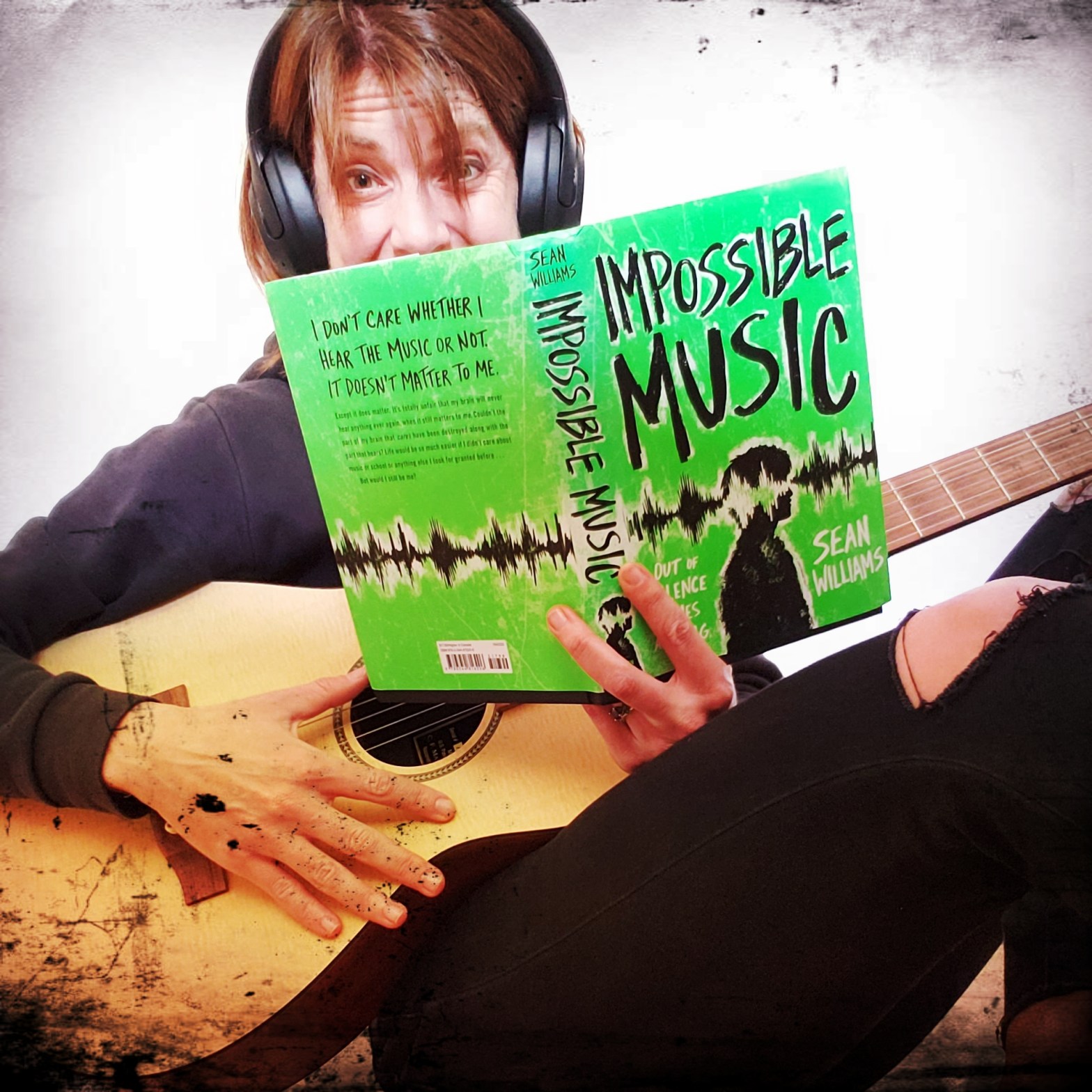
Vlog Review: Impossible Music

Hit Play on the video above.

Premise: Simon is a musician. But he can’t hear. So how can he continue to study music, create music, play music? And, most of all, experience music he will never hear again? Everything about music seems impossible to him. If Simon is going to have a happy life, he’s going to have to accept his new sensations and his new modes of communication — but can he?

Rating: 3/5
Target: 9th-12th grade

Title:  The first thought about where the title comes from is the premise. And it seems, for much of the book to be just that, but there’s more to it that has to do with a performance I won’t get into because I don’t want to spoil anything.

Main Character(s): Simon, 18 y/o (he/him)

Motifs (not exhaustive): identity, music, communication, Deaf culture, art, Auslan, sign language, family, teen relationships, health, mental health, depression, suicide, dreams, commitment, courage, community

Great for…* (readers): who love music or medicine or Deaf culture (or want to learn about any of those). Simon is a bit detached to begin with, so it takes a while to get into the read.

Great for…* (teachers): This one is a pretty easy read. It’d be best used in small reading groups where you have a variety of elements you’re looking at — no one thing stands out in this one.

Parental Warning(s): Some cursing, regular physical intimacy (not seen or described)

Interact: Why would (or wouldn’t) you want to perform in front of a crowd?

Shop local bookstores.
Shop Amazon.
Add on Goodreads.

*The “Great for” category is not exhaustive and does not intend to neglect the multitude of readers/teachers who could learn from this book in any number of ways.

RATINGS GUIDE

٭ = DNF, would not recommend
٭٭ = would not recommend
٭٭٭ = enjoyable, would recommend
٭٭٭٭ = very good, would recommend
٭٭٭٭٭ = amazing, would definitely recommend

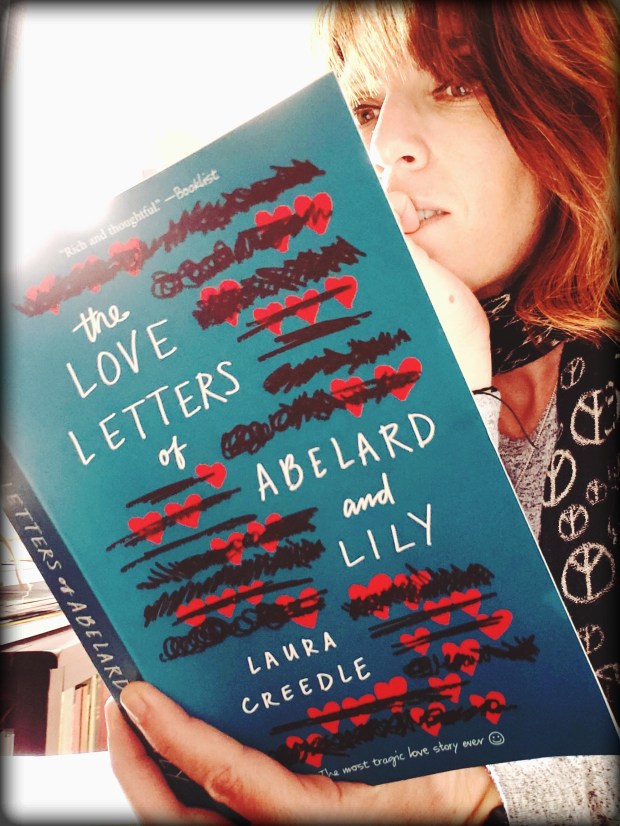
Vlog Review: The Love Letters of Abelard and Lily

Hit Play on the video above.

Premise: Lily has ADHD and failing grades. No matter what she tries, she can’t seem to stay in class, do her homework, quiet the monster inside her, or not break things. When she breaks something on campus, she comes across Abelard, a young man with autism whom she’s known at least since she was seven. The two feel broken until Lily’s impulsiveness (ADHD) propel her to kiss Abelard and the two start dating. But can they stay together or they fated to failure, like the real-life people Abelard and Heloise alluded to in the book’s title?

Rating: 3/5
Target: 9th-12th grade

Title:  Allusion: Abelard was a 12th century French philosopher who exchanged love letters with Heloise, a woman of esteemed intelligence but little purpose. Their letters are recorded in The Love Letters of Abelard and Heloise. (The general narrative is provided in the text of The Love Letters of Abelard and Lily.)

Main Character(s): Lily, 16 y/o (she/her)

Motifs (not exhaustive): neurodivergence, adhd, autism, dyslexia, drug therapy, experimental procedures, family conflict, fate, college, intelligence, hope, comparison to others, literature, film, drama, broken families, romance

Great for…* (readers): strong readers who don’t shy away from SAT words or allusions and quotes to/from medieval literature. (a similar plot structure and work with allusions as Once Upon a Quinceañera which might be better for less confident readers)

Great for…* (teachers): ALLUSIONS AND VOCABULARY! Hello, Mary Shelley’s Frankenstein, stacks of medieval literature, and old Hollywood films. So fun.

Parental Warning(s): None.

Interact: I loved the spelling of words when Lily’s not paying attention to what’s said around her (“Your mother will have to sign the kerblig and return it to the main office before you can be burn to clabs…”). How would you describe what you hear when you’re only half-paying attention?

Shop local bookstores.
Shop Amazon.
Add on Goodreads.

*The “Great for” category is not exhaustive and does not intend to neglect the multitude of readers/teachers who could learn from this book in any number of ways.

RATINGS GUIDE

٭ = DNF, would not recommend
٭٭ = would not recommend
٭٭٭ = enjoyable, would recommend
٭٭٭٭ = very good, would recommend
٭٭٭٭٭ = amazing, would definitely recommend

Vlog Review: I Can Make This Promise

Hit Play on the video above.

Premise: Who is Edie Green and what makes her different? Firstly, she didn’t know she was different until kindergarten when her teacher asked her where her family is from and all she could say was Seattle. Secondly, her mom is Native American, adopted into a white family. As far as Edie knows, they have no connection to her mother’s birth family. She doesn’t know if she’s a part of a local tribe or not. What she does know is she has Native American features — strikingly similar to a woman in a photograph Edie and her friends discover hidden in the attic. But who is the woman in the picture? And how could her parents be hiding information about this woman that may relate to her identity from her?

Rating: 4.5/5
Target: 5-8

Title: The title encapsulates the entirety of the book and only takes its full significance in the final pages. So, to be purposely vague, it’s poignant.

Main Characters: Edie Green, 12 y/o (she/her)

Motifs (not exhaustive): identity, friendship, truth & hidden truth, disagreement, artistry/creativity, otherness, acceptance, coming of age, Native American history/culture, American history, family/adoption

Great for…* (readers): who are themselves coming of age, figuring out who they are and how they fit into a world with ever-changing knowledge about themselves. Readers who appreciate OWN voices, a bit of mystery, or history will also enjoy this book.

Great for…* (teachers): x Native American history, x Washington state history, motif and theme development, x art/film project, MAKE SURE TO READ THE AUTHOR’s NOTE FOR RELATED CLASS CONTENT/PROJECTS.

If you find yourself getting asked “What are you?” or “Where are you from?” how do you respond? What do you want the people who ask those questions to understand?

Shop local bookstores.
Shop Amazon.
Add on Goodreads.

*The “Great for” category is not exhaustive and does not intend to neglect the multitude of readers/teachers who could learn from this book in any number of ways.

RATINGS GUIDE

٭ = DNF, would not recommend
٭٭ = would not recommend
٭٭٭ = enjoyable, would recommend
٭٭٭٭ = very good, would recommend
٭٭٭٭٭ = amazing, would definitely recommend

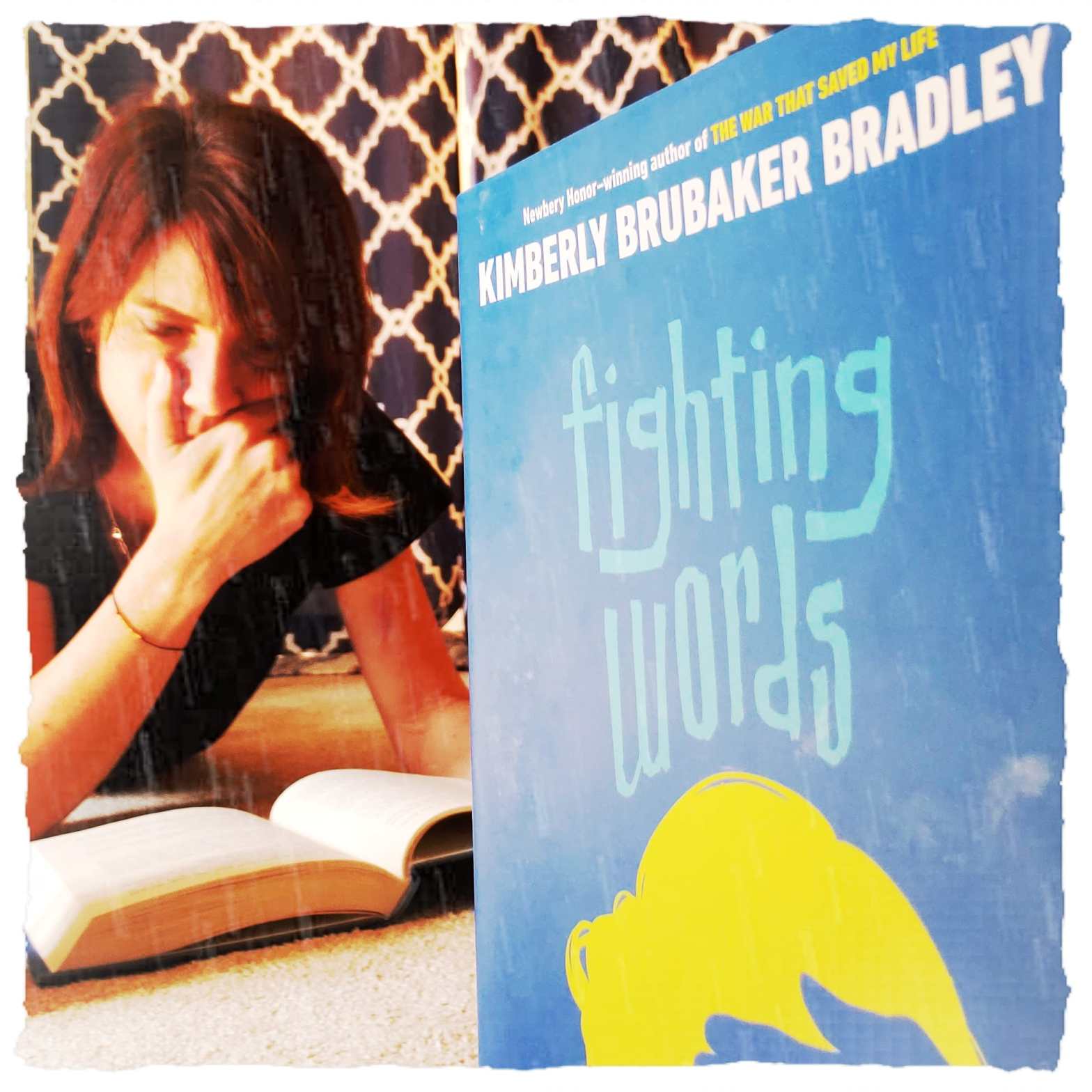
Book Review: Fighting Words

I will say it again. (I said it on social media already.) And again and again and again. Holy Snow. 

I love books. I enjoy most books. I read fun books, mostly, with some element of depth to them, but let’s call a spade a spade. They’re mostly about entertainment and empathy. But this book. Holy snow. 

Fighting Words by Kimberly Brubaker Bradley is a powerful, heart-wrenching work about more than its premise, which is weighty and deserving in itself. Although statistics vary, data shows 1 in 4 girls and 1 in 13 boys fall victim to sexual abuse at some point in their childhood. Yet, I cannot think of a single middle grades book (other than this one) that deals with the topic at all, let alone as tactically and expertly as Bradley’s Newbery Honor Book. 

Della informs you that she’s ten from the start of Fighting Words, the story she narrates. She begins with the simple facts and builds to the difficult narratives and sub-narratives. From the beginning of Della’s account, she and her older sister Suki find themselves in foster care. Their mother, whom Della barely remembers except for one explosive incident (literally), is an incarcerated meth addict. The man with whom they were left at her incarceration, well, that’s where some of the difficulty resides. It was his inappropriate assault of Della that led to their removal from his care. The scene gets told, once Della is ready to tell it, leaving the reader with a sense of horror and revulsion without feeling the scene crossed a literary line for the target audience. How can a scene be appropriately inappropriate? I don’t know. But I read one in this book.

The quality of the writing and the voice is worthy of the topic here. It would have to be to have the audacity to attempt to deal with sexual abuse, abandonment, and the aftermath. Importantly, Bradley writes from experience, and confesses to such in the author’s note. But this is not a book about trauma; it’s a book about healing. 

Like any healing process, Della and Suki do not have a clear and easy path to follow. Della has trouble with a boy named Trevor at school. She pushes people away with her use of four letter words (which, in the book, she substitutes for snow, snowman, snowflake, etc.) both deftly and intelligently. Suki is the only person Della could rely on to take care of her. But Suki has had to parent Della since she was herself six. Now that they’re in foster care, and preparing for court with their abuser, there are plenty of proficient adults to care for Della. And for Suki, too. But Suki and Della don’t always know how to let them or how to trust them.

The characters grow in themselves as the narrative progresses. Della tells you the hard parts. Even the hardest part. (Read with tissue nearby. She’ll warn you it’s coming.) And show you their courage along the way.

There are multiple characters with “bad stories” in this book. Some of which you hear, some of which you don’t. (Even Della and Suki shy away from the explicit and ugly details of everything– making it both tasteful and challenging for a middle grade audience, yet better to be read with someone to talk to through it.) Some of those bad stories relate to poverty, some to abuse, some to mental health. What Bradley makes clear is each character has a story whether they tell it or not.

Fighting Words embodies its title. This is Della. Telling you her story. In her words. With courage. With bravery. With love. With fight. You may not hear many ten-year-olds tell you about their abusive experiences. I pray you don’t (not because they won’t tell you but because they don’t have them to tell). Listen to her voice. It may inspire you to use your own.

You’ve gotta read this book. It’s the kind of book I live for because it’s not just literature. It’s art. 

Rating: 5/5
Target: 6th grade and up for general audience, younger for children of abuse

Parents, please read this book with your child. Do not send them off to read this and struggle through its content on their own. Better yet, you read it first. Then read it a second time with them. There’s nothing easy about it. But, much like parenting itself, it’s valuable and important. No one said it would be easy. For snowflake’s sake. 

Readers, don’t scoff at the target audience. This book is for older readers as much as it is for middle grade readers. Snow. I could use this in a college course curriculum. It’s that well done.

Shop local bookshops.
Shop Amazon.

Add on Goodreads.

RATINGS GUIDE

٭ = DNF, would not recommend
٭٭ = would not recommend
٭٭٭ = enjoyable, would recommend
٭٭٭٭ = very good, would recommend
٭٭٭٭٭ = amazing, would definitely recommend

The Days of Our Pandemic: episode z

a pinkyandthebrainhomage by KZ Rochelle (of course)

Outside the lavender home with blue violet trim on Wonky Way Lane, a pair of peregrine falcons chased each other out of a rabbit den, squawking and combating mid-flight. Prior peoples may have seen a harbinger herein, but those who roamed the land had long since considered ancient omens.

In front of the bathroom mirror in said Wonky Way Lane home, the following scene took place. Observe, Reader, from your safe distance on the far side of the screen lest you spiral into what you discover…

“What shall we do today, Z?” K asked the figure in the mirror.

“The same thing we do every day, K,” Z responded. “Escape the world enclosed by these four walls.”

Before K could agree with the brilliance of such an idea, cackling emanated from the walls and reflected off the toothpaste-coated tile floors. 

“Rochelle? Rochelle? Stop that!” K hit the wall with the outside of her fist. 

The cackling continued.

“RO-Chelle!” K pounded. 

The cackling ceased but K already felt regret blooming in the form of a bruise on her wrist.

“Damn you, Rochelle.” K returned to Z’s fresh face in the mirror. She coated it with concealer. “Where were we, Z?”

“Where we always are, K. Escape.”

“Of course, Z. You’re rather a smart one, aren’t you?”

“Always dapper, yes,” Z said, petting down any lingering wrinkles on her sweater.

“Oh, you’re so witty. Smart. Dapper. Good one, Z.” K threw her head back in a chortle, knocking the back of her head on the hospital white wall behind her. “Ouch.” She rubbed the point of impact. 

“Enough of this nonsense,” said Z. 

K snapped to attention. But thought about the back of her head. And wondered if her thoughts came from that spot on the back of her head that had taken a beating. And if her thoughts came from that spot on the back of her head that had taken a beating and now that part of the back of her head had been hit by the wall….wait, no….had hit the wall, then perhaps her thoughts could radiate out faster. Like the pain itself. Throbbing its way from a single point like a ripple. Or, perhaps she’d cracked the spot that held her thoughts and the thoughts that came from that spot on the back of her head would fall into an abyss so dark and lonely they’d never be found again. Or maybe her thoughts…

“K! Listen to me!”

“Yes, Z.”

“We must find our way out of this place. We have been in here for a year. Isolated. Quarantined. Our lives placed on pause while the world outside swims through a COVID-infested ooze.”

“Oooh. Ooze. Is it like slime? I like slime, Z. Maybe we could go swimming too?”

“Yes! But no. Not in the ooze. But we need to get out and into the world again.”

“How will we do that Z?”

Z motioned K with a solitary finger. She beckoned her closer. Closer. Closer to the mirror where Z resided. Until BAM! K knocked her skull against the glass.

“Ouch. That hurt.”

Z rolled her eyes. This happened every morning. K hit her head from behind. She hit her head from the front. They were lucky when she didn’t end up lethargic for the day in consequence, but, still, the continual impact had its effect.

“As I was saying!” declared Z with stentorian posture and a downward struck fist. 

K rubbed her forehead. And her backhead. 

“Yeah, Z. As you were saying.”

“We must escape the confines of these four walls again today the same way we do every day.”

“Right-o, Z! Same way we do every day.” K nodded her head enthusiastically. Then threw up. 

“You’ll have to clean that up before we escape,” said Z evaluating her cuticles. 

They were out of Clorox and bleach and dishwashing soap and detergent and vinegar, so while K cleaned up her mess with a dustpan and some febreeze, Z turned the other way to bake honey banana cupcakes. Again. They always had bananas to go on.

Will K and Z escape their four walls before they go bananas? Find out next time in The Days of our Pandemic….

Click here to read the next installment

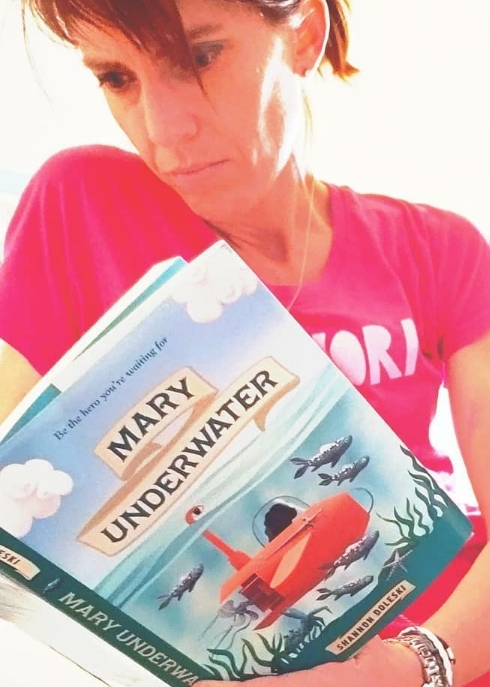
Vlog Review: Mary Underwater

Watch the vlog, read the book, share your rating!

Rating 3/5

RATINGS GUIDE

٭ = DNF, would not recommend
٭٭ = would not recommend
٭٭٭ = enjoyable, would recommend
٭٭٭٭ = very good, would recommend
٭٭٭٭٭ = amazing, would definitely recommend